About 20 Days in Mariupol
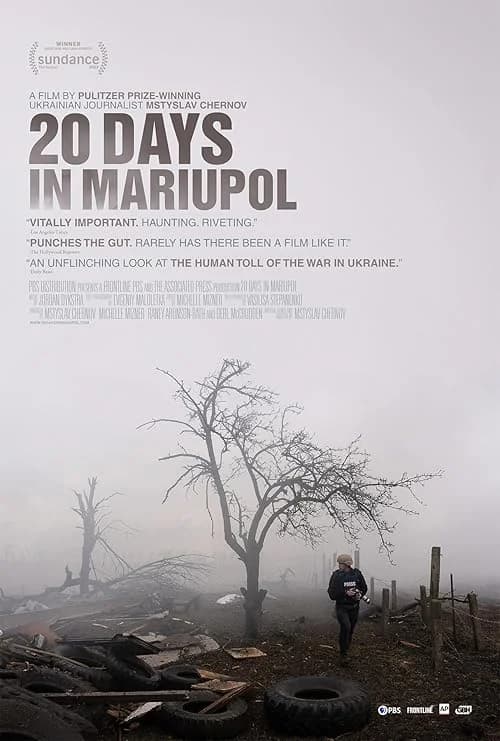
20 Days in Mariupol stands as one of the most vital and harrowing documentaries of our time, offering an unflinching, ground-level view of the early days of Russia's full-scale invasion of Ukraine in 2022. Directed by Associated Press journalist Mstyslav Chernov, the film is not merely a report but a first-person chronicle of survival and witness. Chernov and his AP colleagues found themselves trapped in the strategically vital port city of Mariupol as it was encircled, bombarded, and ultimately destroyed. Their mission shifts from reporting the news to becoming the last international journalists on the ground, documenting war crimes, civilian casualties, and the sheer brutality of urban siege warfare with profound courage.
The film's power lies in its raw, immediate footage and Chernov's poignant narration, which conveys the immense psychological weight of documenting atrocity while facing mortal danger. We see the destruction of a maternity hospital, the digging of mass graves, and the daily struggle of civilians for food, water, and safety. It is cinema as essential historical record, capturing moments that would otherwise be lost to propaganda or obscurity. The direction is stark and purposeful, avoiding stylistic flourish to let the horrific reality speak for itself.
Viewers should watch 20 Days in Mariupol to understand the human cost of modern warfare beyond headlines. It is a testament to journalistic bravery and a devastatingly clear-eyed account of a city's martyrdom. The film's critical acclaim, including the Academy Award for Best Documentary Feature, is a testament to its searing importance. This is not easy viewing, but it is necessary viewing—a powerful, unforgettable document of resilience and truth in the face of overwhelming darkness.
The film's power lies in its raw, immediate footage and Chernov's poignant narration, which conveys the immense psychological weight of documenting atrocity while facing mortal danger. We see the destruction of a maternity hospital, the digging of mass graves, and the daily struggle of civilians for food, water, and safety. It is cinema as essential historical record, capturing moments that would otherwise be lost to propaganda or obscurity. The direction is stark and purposeful, avoiding stylistic flourish to let the horrific reality speak for itself.
Viewers should watch 20 Days in Mariupol to understand the human cost of modern warfare beyond headlines. It is a testament to journalistic bravery and a devastatingly clear-eyed account of a city's martyrdom. The film's critical acclaim, including the Academy Award for Best Documentary Feature, is a testament to its searing importance. This is not easy viewing, but it is necessary viewing—a powerful, unforgettable document of resilience and truth in the face of overwhelming darkness.