
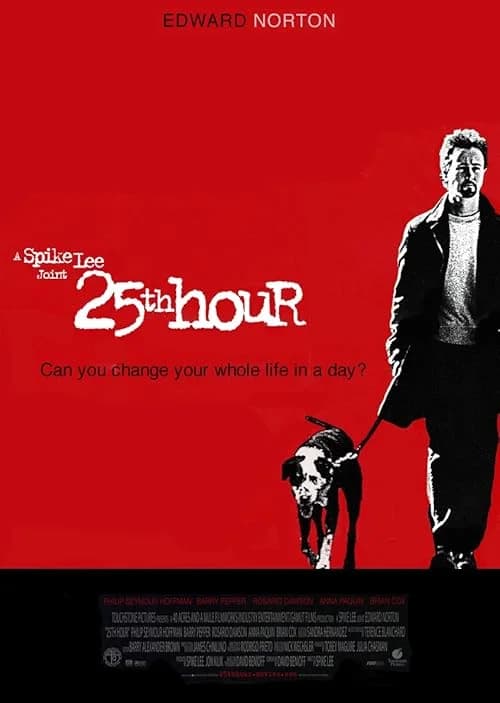
About 25th Hour
Spike Lee's 25th Hour is a haunting character study that transcends its crime drama premise to become a profound meditation on regret, identity, and post-9/11 New York. Edward Norton delivers a career-defining performance as Montgomery Brogan, a convicted drug dealer facing seven years in prison. The film unfolds over his final 24 hours of freedom, as he confronts friends, family, and his own choices.
The supporting cast is exceptional, with Philip Seymour Hoffman as a conflicted teacher, Barry Pepper as a cynical Wall Street trader, and Rosario Dawson as Monty's loyal girlfriend. Their interactions reveal the fractures in their relationships and the shared history that binds them. Spike Lee's direction is masterful, using New York City not just as a backdrop but as a living, breathing character—particularly poignant in its post-September 11th context.
What makes 25th Hour essential viewing is its emotional honesty and moral complexity. The famous bathroom mirror monologue, where Monty unleashes a torrent of hatred toward every New York stereotype (and ultimately himself), remains one of cinema's most raw and powerful scenes. The film asks difficult questions about second chances, accountability, and whether we can ever truly escape our past. It's a beautifully crafted, deeply human story that stays with you long after the credits roll.
The supporting cast is exceptional, with Philip Seymour Hoffman as a conflicted teacher, Barry Pepper as a cynical Wall Street trader, and Rosario Dawson as Monty's loyal girlfriend. Their interactions reveal the fractures in their relationships and the shared history that binds them. Spike Lee's direction is masterful, using New York City not just as a backdrop but as a living, breathing character—particularly poignant in its post-September 11th context.
What makes 25th Hour essential viewing is its emotional honesty and moral complexity. The famous bathroom mirror monologue, where Monty unleashes a torrent of hatred toward every New York stereotype (and ultimately himself), remains one of cinema's most raw and powerful scenes. The film asks difficult questions about second chances, accountability, and whether we can ever truly escape our past. It's a beautifully crafted, deeply human story that stays with you long after the credits roll.


