About Serpico
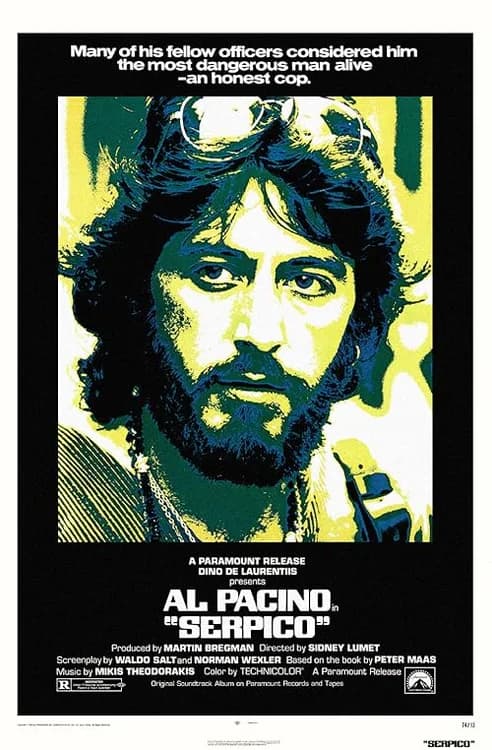
Directed by Sidney Lumet, 'Serpico' (1973) is a powerful biographical crime drama based on the true story of Frank Serpico, an idealistic New York City police officer who courageously exposes systemic corruption within the department. The film chronicles Serpico's journey from a fresh-faced recruit to a disillusioned whistleblower, showcasing his struggle to maintain integrity in a world where bribery and misconduct are the norm. As he gathers evidence and reports the corruption to higher authorities, he faces ostracism, threats, and betrayal from the very colleagues sworn to uphold the law, culminating in a tense and dangerous isolation.
Al Pacino delivers a career-defining performance as Frank Serpico, masterfully capturing the character's moral conviction, growing paranoia, and charismatic yet vulnerable spirit. His portrayal earned widespread acclaim, anchoring the film's emotional core. Lumet's direction is gritty and realistic, using the streets of 1970s New York as a visceral backdrop that enhances the film's urgent, documentary-like feel. The supporting cast adds depth to the portrayal of institutional decay.
Viewers should watch 'Serpico' not only for its historical significance as a landmark film about police corruption but also for its timeless themes of individual conscience versus institutional power. It remains a thrilling and thought-provoking drama, praised for its uncompromising narrative and Pacino's electrifying performance. The film's influence on the crime genre and its commentary on ethical courage make it essential viewing for fans of true stories and intense character studies.
Al Pacino delivers a career-defining performance as Frank Serpico, masterfully capturing the character's moral conviction, growing paranoia, and charismatic yet vulnerable spirit. His portrayal earned widespread acclaim, anchoring the film's emotional core. Lumet's direction is gritty and realistic, using the streets of 1970s New York as a visceral backdrop that enhances the film's urgent, documentary-like feel. The supporting cast adds depth to the portrayal of institutional decay.
Viewers should watch 'Serpico' not only for its historical significance as a landmark film about police corruption but also for its timeless themes of individual conscience versus institutional power. It remains a thrilling and thought-provoking drama, praised for its uncompromising narrative and Pacino's electrifying performance. The film's influence on the crime genre and its commentary on ethical courage make it essential viewing for fans of true stories and intense character studies.