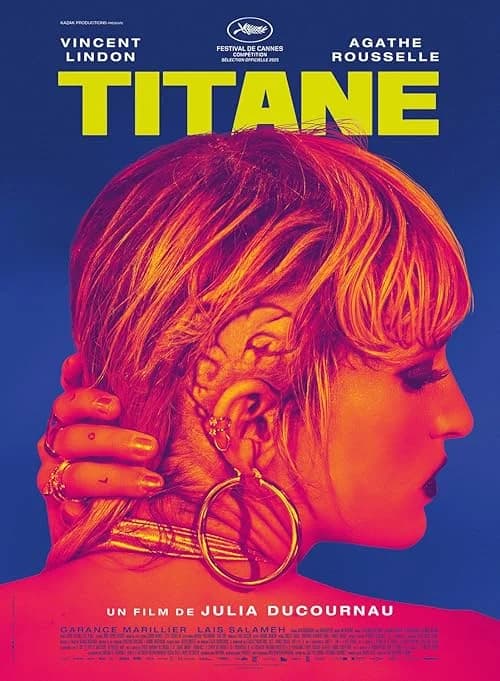
About Titane
Julia Ducournau's 'Titane' is a cinematic lightning bolt that defies easy categorization, blending body horror, psychological drama, and a deeply strange tale of found family. The film follows Alexia, a dancer with a titanium plate in her skull following a childhood car accident, who develops a sexual and ultimately procreative relationship with an automobile. After a series of violent acts, she goes on the run, assuming the identity of a young boy who disappeared a decade earlier. She is taken in by the boy's grieving father, a lonely fire captain named Vincent, who desperately clings to the belief that this damaged, dangerous person is his long-lost son.
Agathe Rousselle delivers a fearless, largely wordless performance as Alexia/Adrien, conveying immense trauma and transformation through physicality alone. Vincent Lindon is equally powerful as the emotionally raw Vincent, whose need for connection creates a terrifyingly fragile bond. Ducournau's direction is audacious and unflinching, crafting visceral, unforgettable imagery that explores themes of identity, gender, trauma, and the grotesque limits of the human body.
Viewers should watch 'Titane' not for conventional narrative thrills, but for a profoundly transgressive and emotionally charged experience. It's a film that gets under your skin—literally and metaphorically—challenging notions of love, family, and humanity itself. While its extreme content won't be for everyone, it stands as a landmark of modern French extremity and a testament to cinema's power to shock, awe, and move in equal measure.
Agathe Rousselle delivers a fearless, largely wordless performance as Alexia/Adrien, conveying immense trauma and transformation through physicality alone. Vincent Lindon is equally powerful as the emotionally raw Vincent, whose need for connection creates a terrifyingly fragile bond. Ducournau's direction is audacious and unflinching, crafting visceral, unforgettable imagery that explores themes of identity, gender, trauma, and the grotesque limits of the human body.
Viewers should watch 'Titane' not for conventional narrative thrills, but for a profoundly transgressive and emotionally charged experience. It's a film that gets under your skin—literally and metaphorically—challenging notions of love, family, and humanity itself. While its extreme content won't be for everyone, it stands as a landmark of modern French extremity and a testament to cinema's power to shock, awe, and move in equal measure.